Parts designed to be 3D printed, not just parts that happen to be printed. DeWys Engineering designs parts specifically for additive manufacturing: production parts, tooling, end-of-arm tools and fixtures that take advantage of what 3D printing can do and avoid what it can’t. Our sister company, Forerunner 3D Printing, is in the same building, so the people designing your part work next to the people printing it.
Why Design Specifically for 3D Printing?
A part designed for machining or molding can usually be printed, but it won’t get the benefits. Designing for the process from the start opens up options other methods can’t match:
- Internal passages: vacuum, air and fluid channels routed through the part instead of plumbed outside it
- Part consolidation: several machined parts combined into one printed part
- Lightweighting: ribbed and open structures that keep stiffness while cutting weight, which matters on robot tooling
- No draft or parting lines: geometry that would need complex tooling, or couldn’t be molded at all
- Production without tooling: from a single part to thousands a year, with no mold investment
It also means designing around each process’s limits: build orientation for accuracy, support strategy, wall thickness, snap-fit and thread design, and the real material properties of printed nylon and resin.
What We Do
- Design new parts for additive production: enclosures, brackets, housings and end-use components built to be printed in volume
- Convert existing parts: redesign machined or molded parts to print, lower cost or remove assembly steps
- Process and material selection: which printing technology fits the part, the quantity and the budget
- Automation tooling: end-of-arm tools, gripper fingers, nests, seals and fixtures (see automated machine design)
- Scan-based design: laser scanning existing parts and tooling so new designs fit the real footprint
3D Printing Technologies We Design For
- HP Multi Jet Fusion (MJF): Nylon 12, glass-bead-filled Nylon 12 and TPU for production parts, tooling and end-of-arm tools
- SLA: smooth, detailed resin parts, including clear, elastomer, high-temperature and ESD materials
- PolyJet: fine detail and parts that combine rigid and rubber-like materials
- FDM: large, durable parts in engineering thermoplastics from ABS to ULTEM and carbon-fiber nylon
- SLS: nylon and glass-filled nylon end-use parts
- DLP: high-resolution, molded-quality small parts in end-use resins
Design for Additive Projects
One End-of-Arm Tool for Three Part Lengths: Reeves Plastics
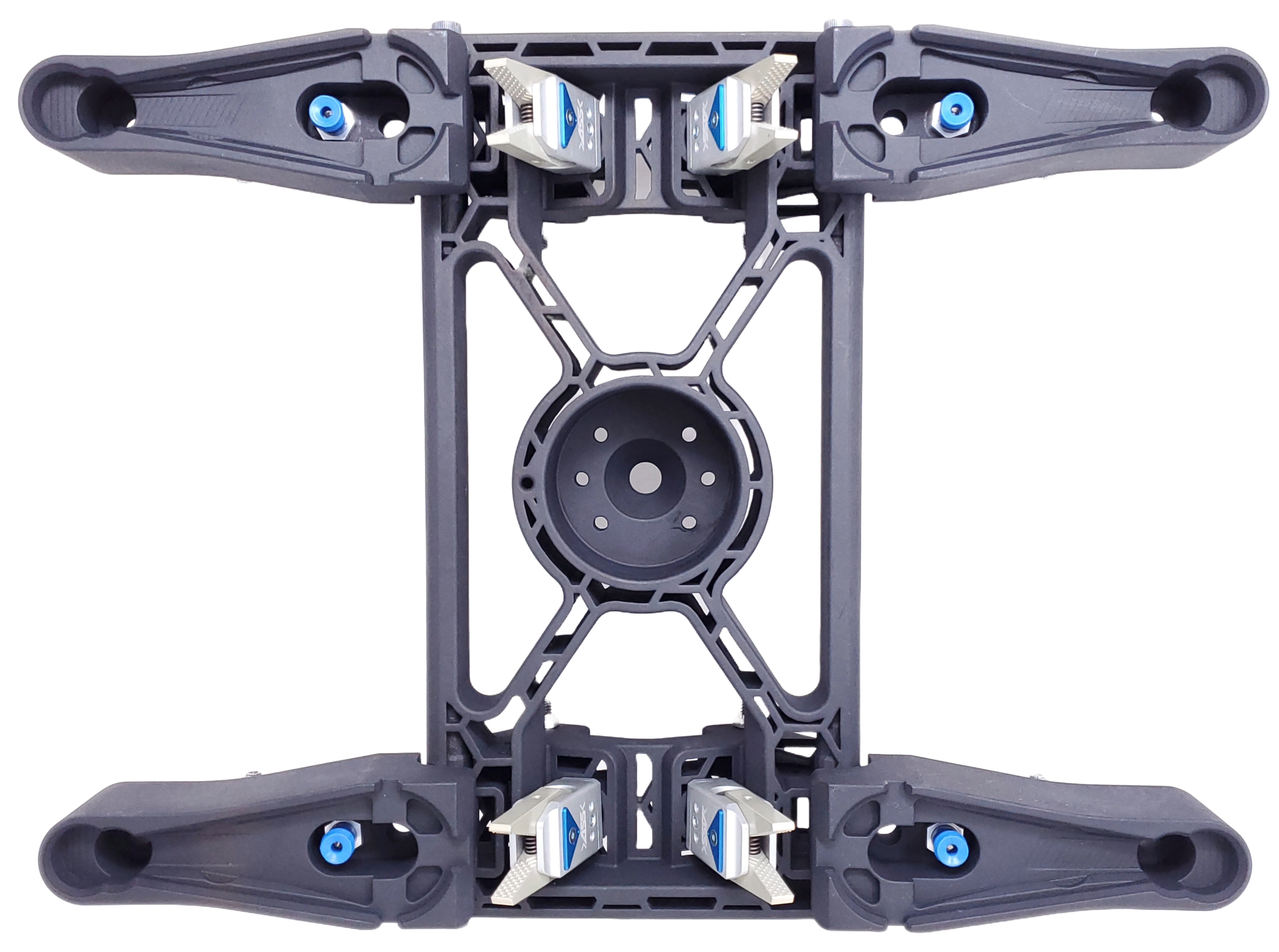
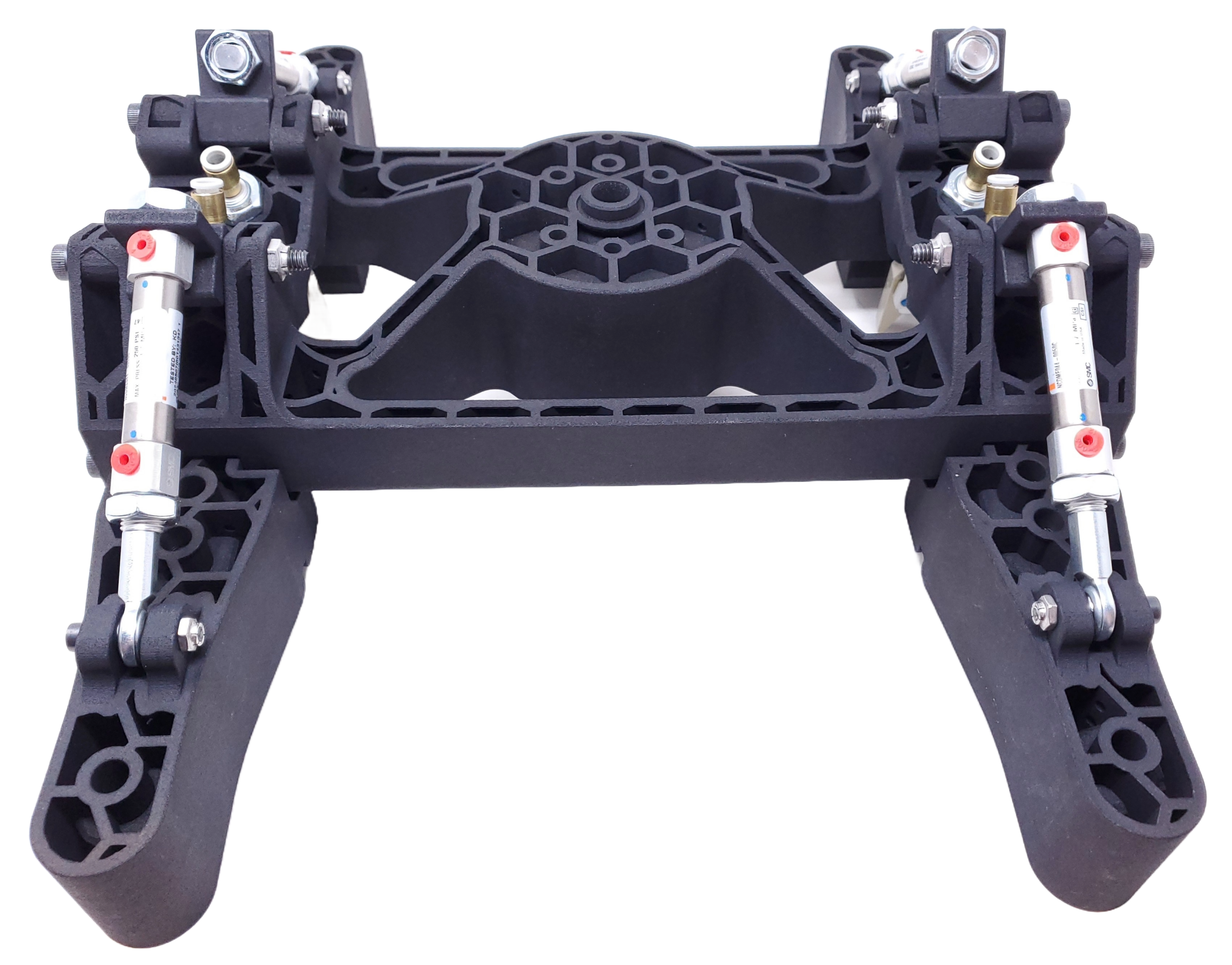
Reeves Plastics runs a four-cavity injection mold with interchangeable inserts that produce a short, medium or long version of the same lever. Every time they swapped inserts, the end-of-arm tool on the press robot had to be readjusted for the new length, which took time and never repeated well.
We designed one end-of-arm tool that picks all three versions and mounts to the robot already on the press. Sprue grippers hold the runner and vacuum cups pick each lever. The frame is a ribbed, lightweighted HP MJF nylon structure with its vacuum passages printed inside the part, so only a few connection points need external tubing and there are almost no hoses to snag. The four gripper arms are printed separately and pivot on shoulder bolts. That kind of internal routing can’t be machined into an aluminum plate.
The tool also removes a step in the process. After pulling the parts from the mold, small pneumatic cylinders pivot the arms and the stiff material snaps cleanly at each gate. The vacuum releases the finished levers onto a cooling conveyor, while the tool keeps the runner, carries it to a grinder and drops it in to be reground and fed back to the press. One tool now covers all three versions, with no changeover adjustment and no separate degating step.
Designed for Printing From Day One: Power Wheels Battery Conversion Kit

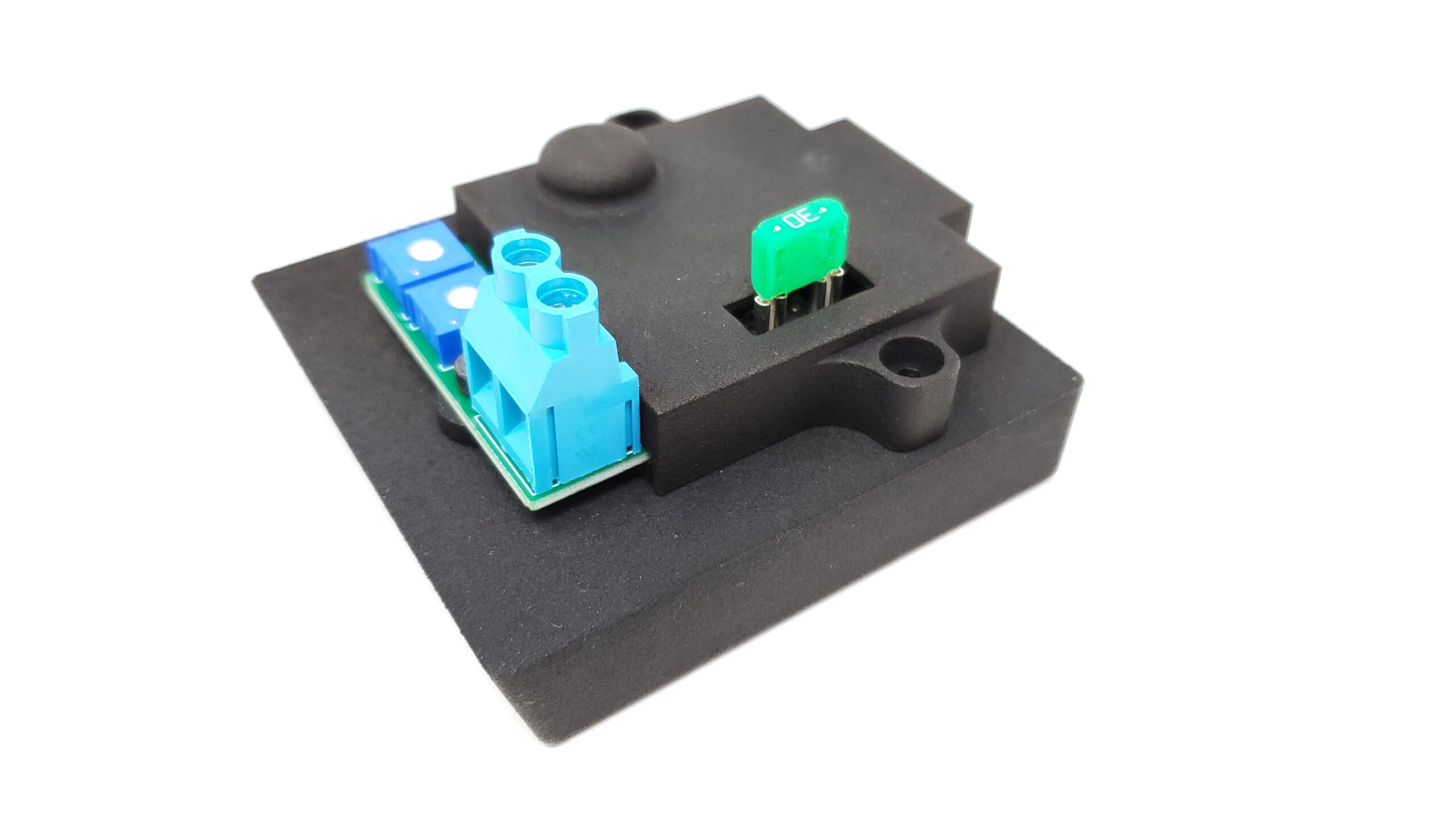
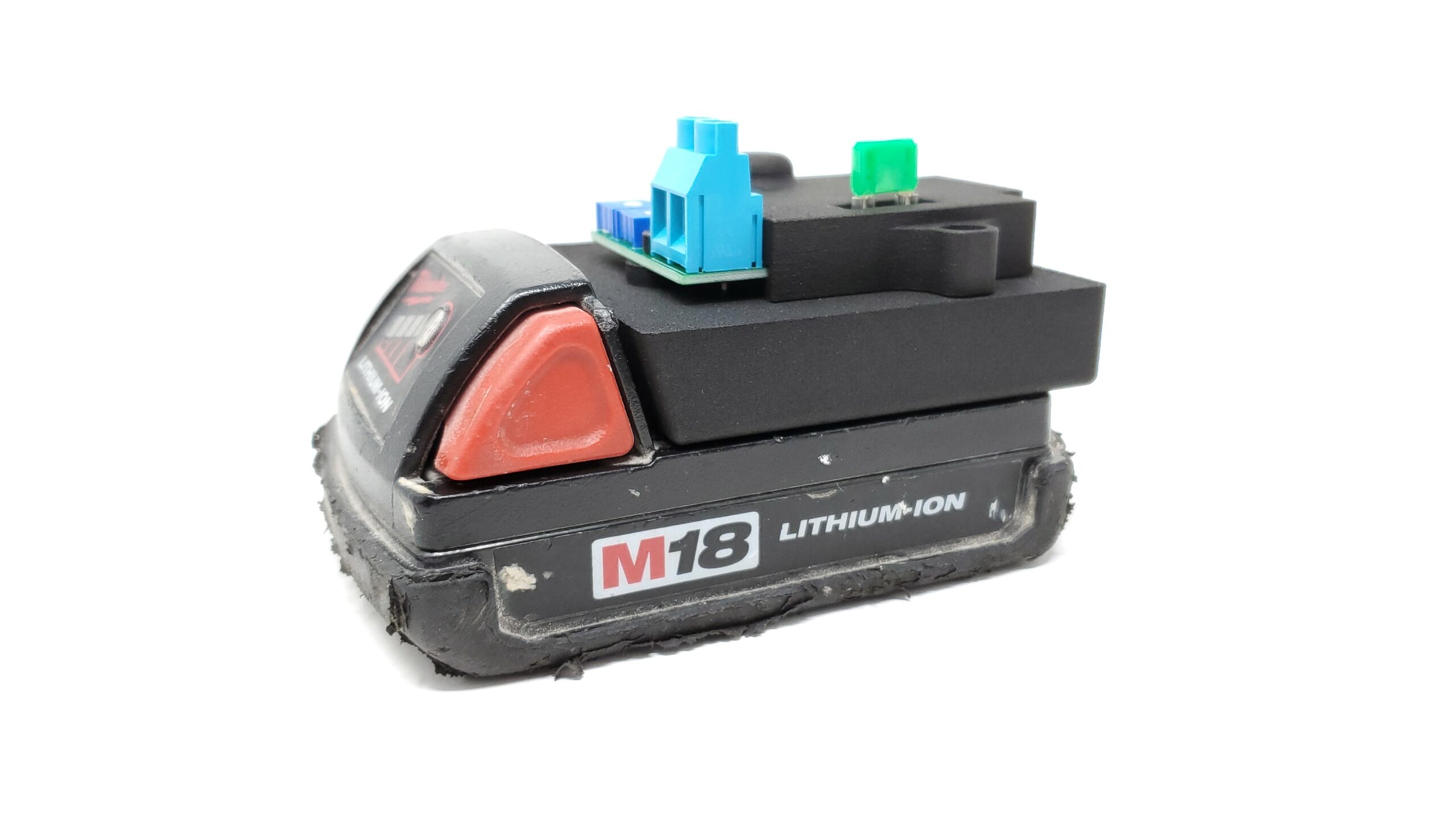
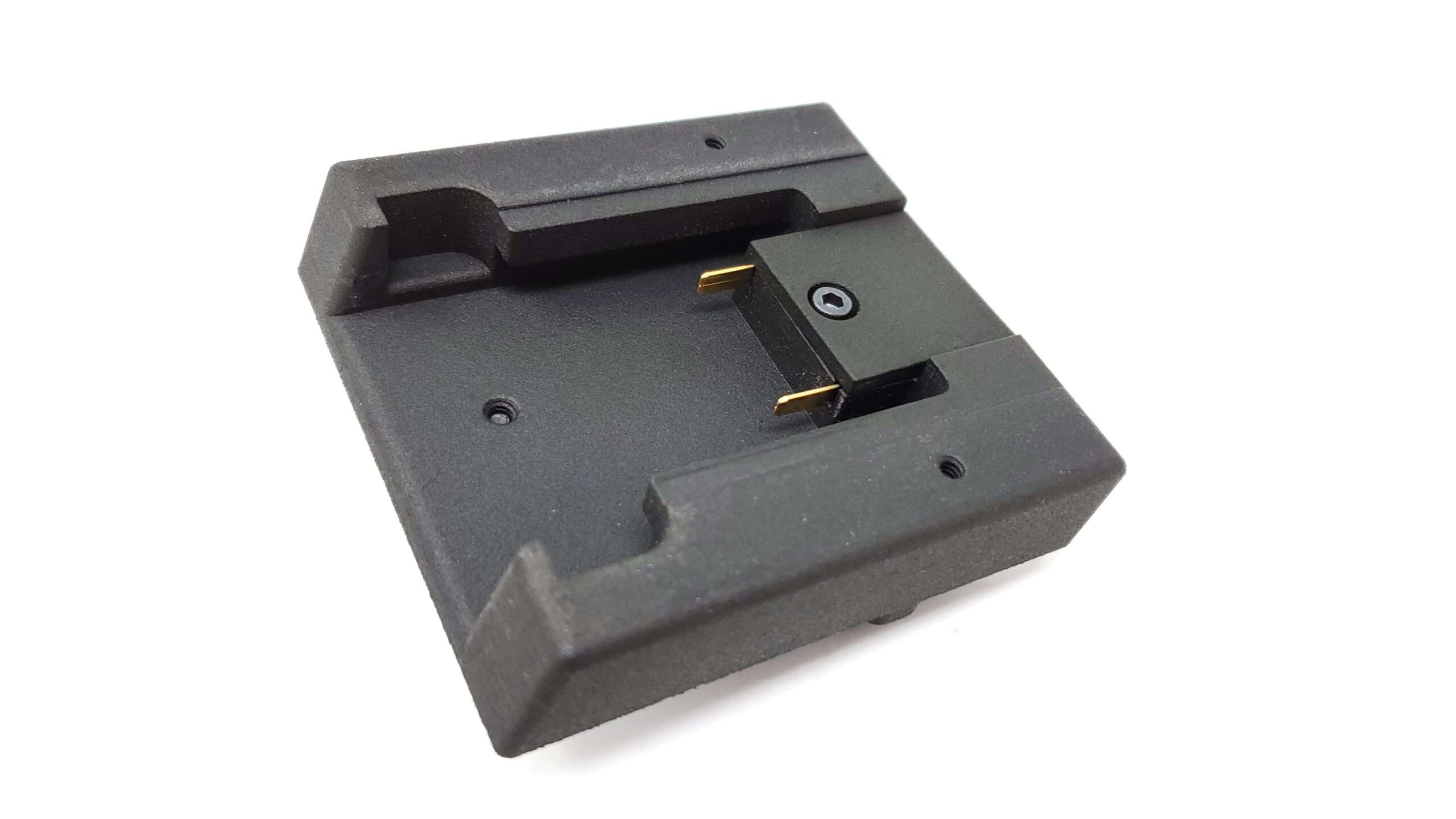
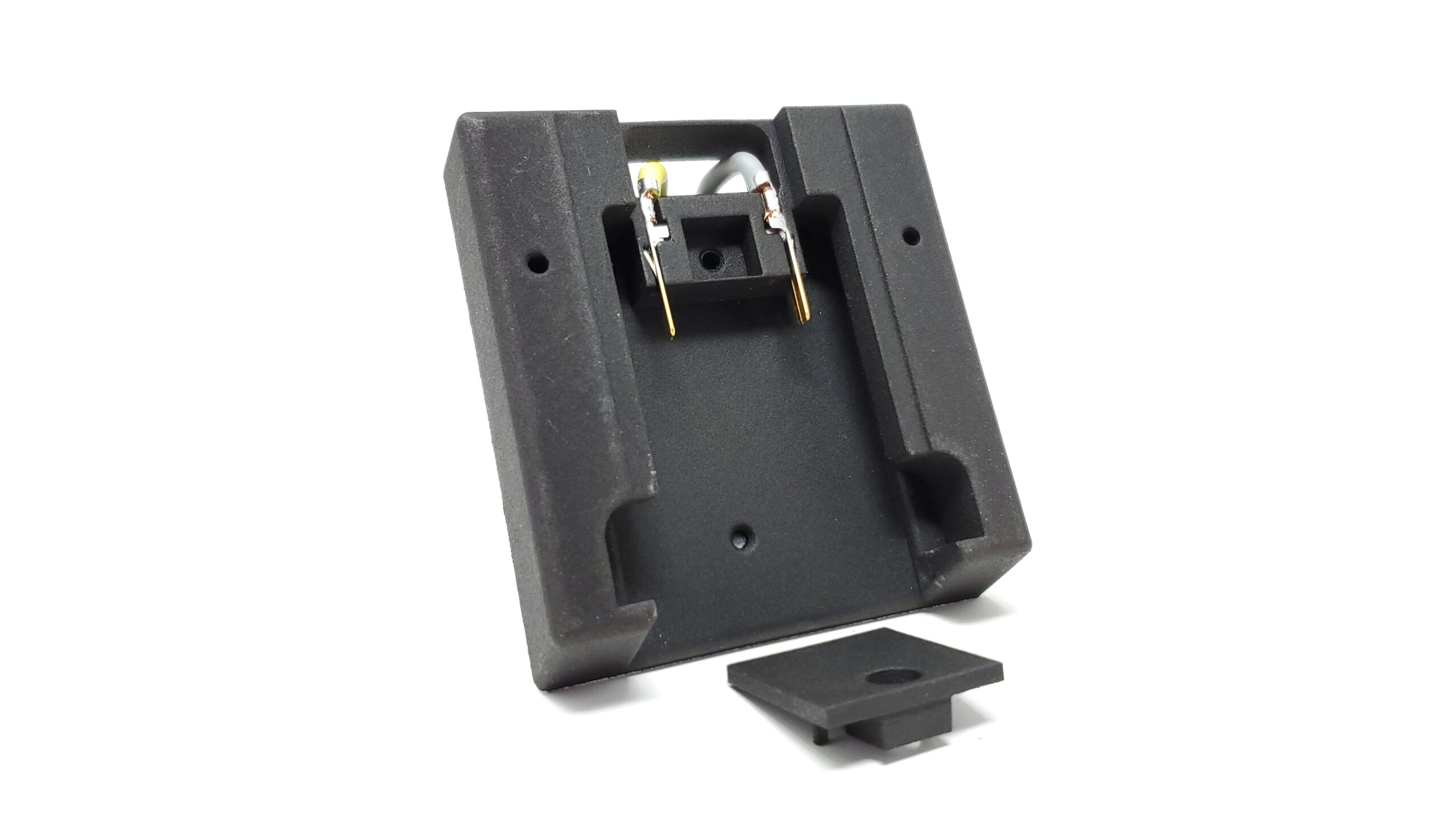
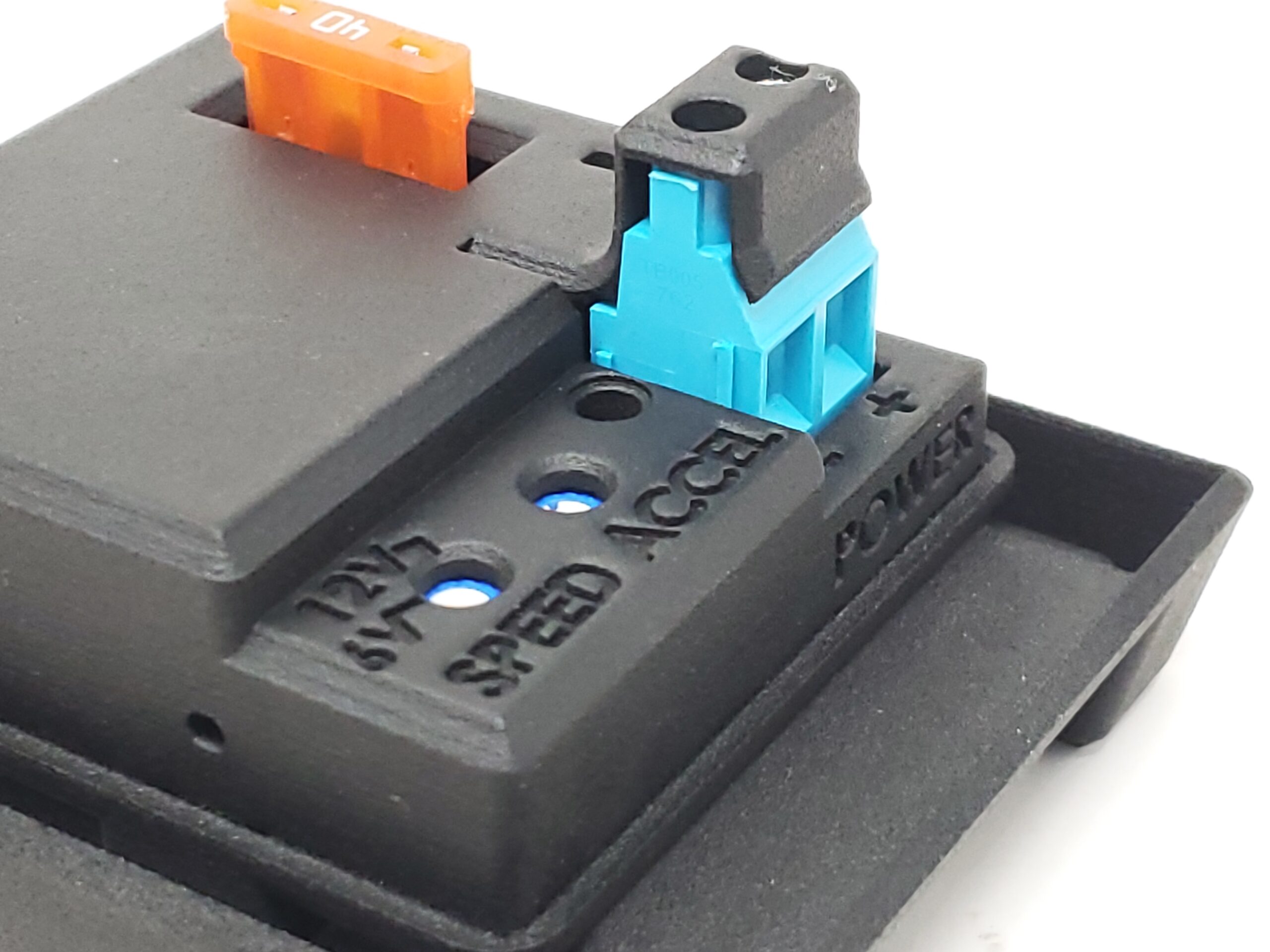
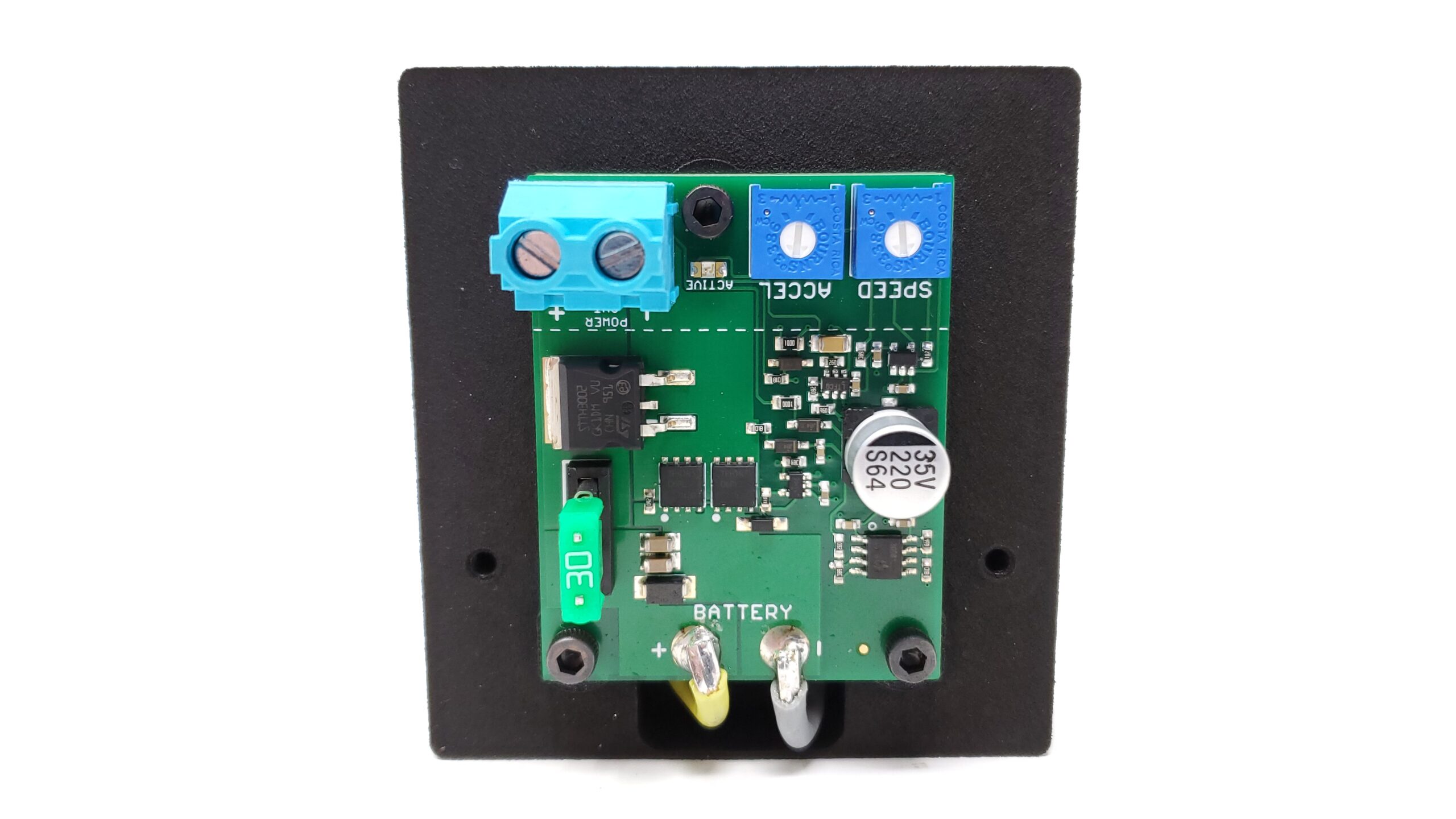
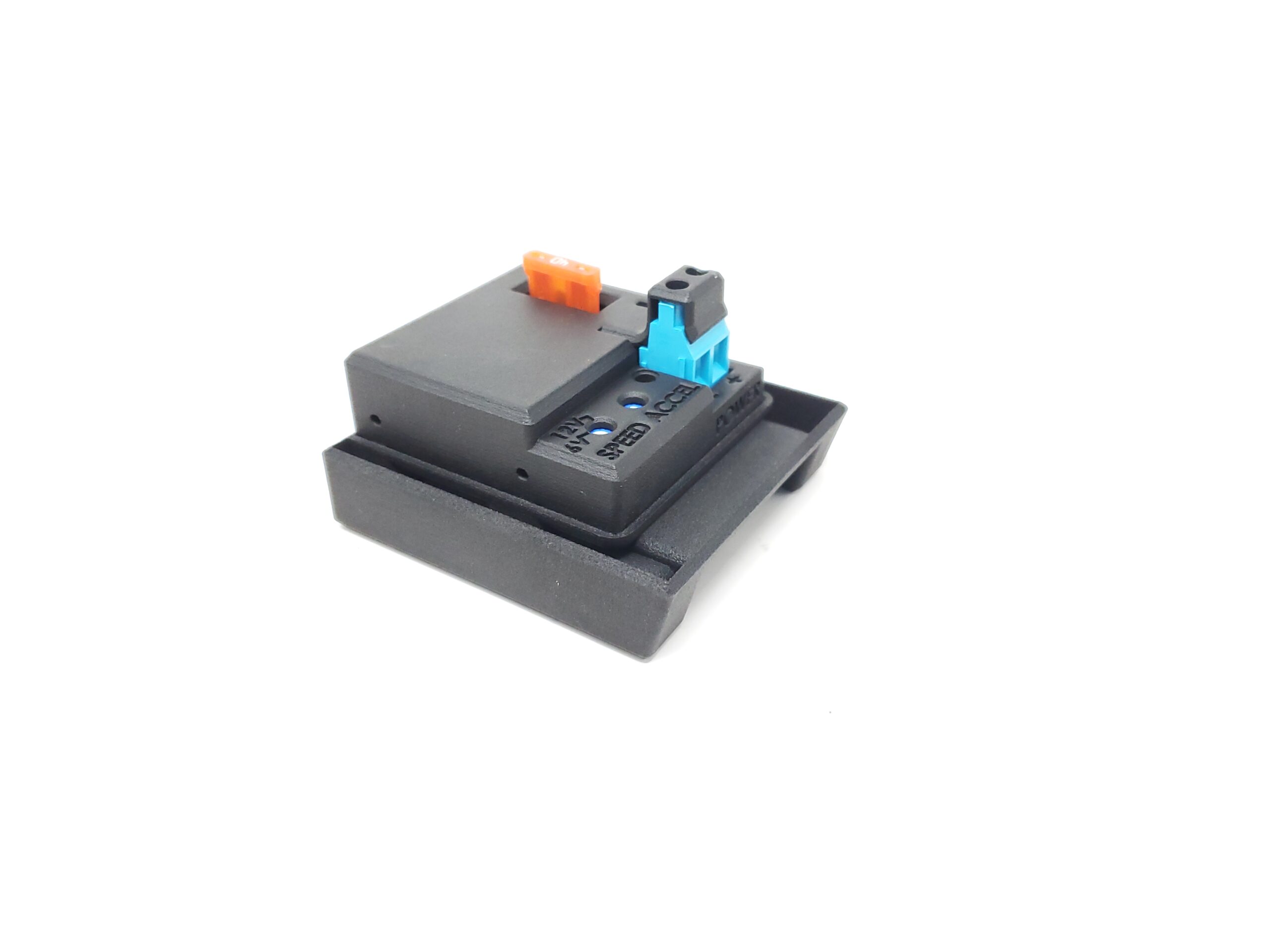
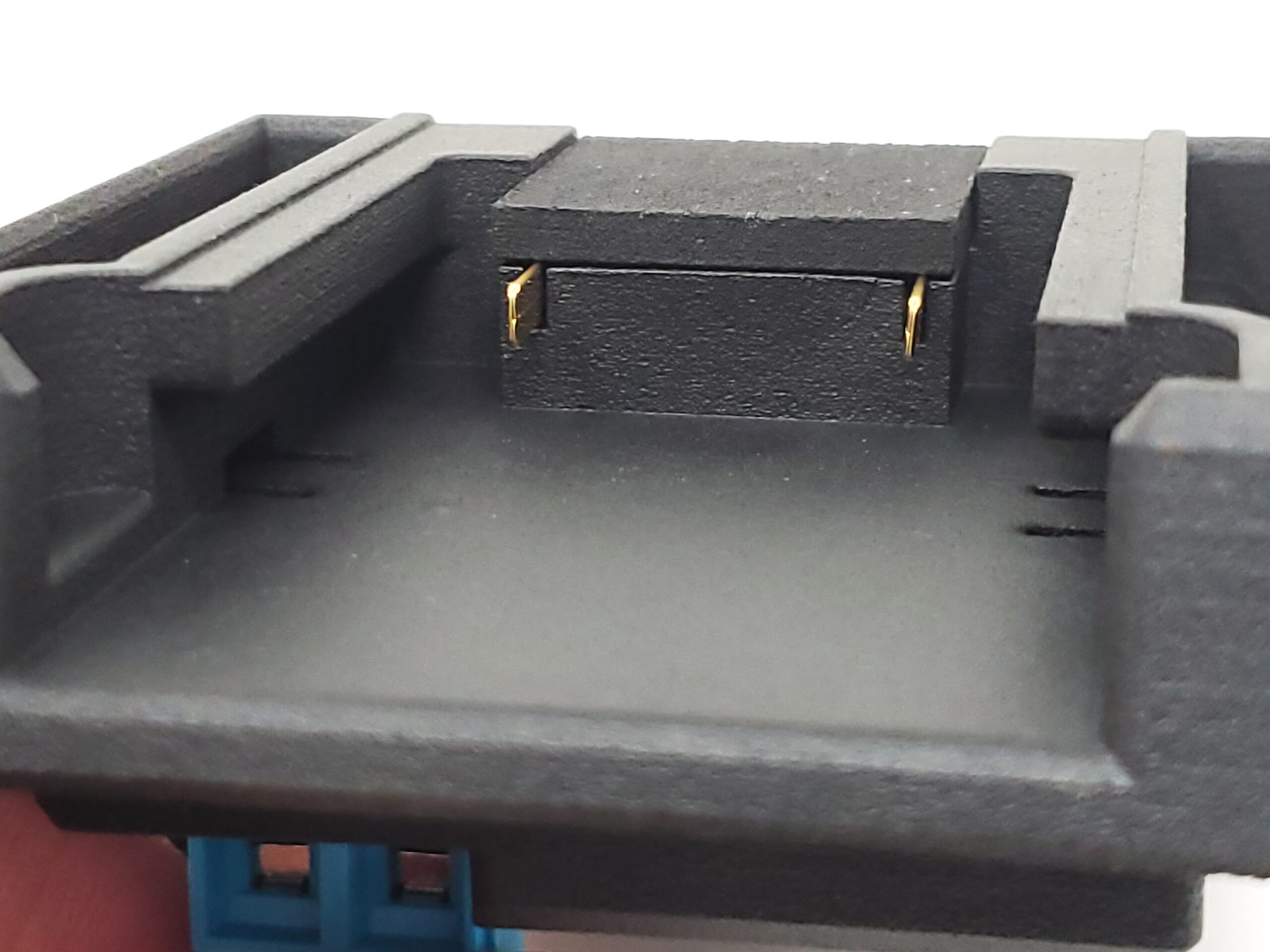
A customer wanted a retrofit kit for kids’ Power Wheels and Hot Wheels ride-on cars. The kit lets parents cut out the stock lead-acid battery and run the car on the DeWalt or Milwaukee drill batteries they already own and charge. Our electrical engineering partner, Magnum Engineering, designed the controller, which adds adjustable top speed and a soft start so the car doesn’t spin its wheels or strip its drivetrain on takeoff.
We designed the enclosure. It had to locate and latch the tool battery, carry the pogo pins that connect the battery to the circuit board, and seal the board under a cover with a one-way snap fit that isn’t meant to come apart once assembled. Volumes were never going to justify an injection mold, and the geometry was too complex to mold cheaply anyway, so we never designed it for molding. The whole assembly was designed for HP MJF Nylon 12 production from the start: features that print well, snap fits tuned for the material and no compromises for draft or parting lines. A few hundred units have been produced, all printed.
Two Printing Processes in One Tool: Leak-Test Seal and Label-Application Block
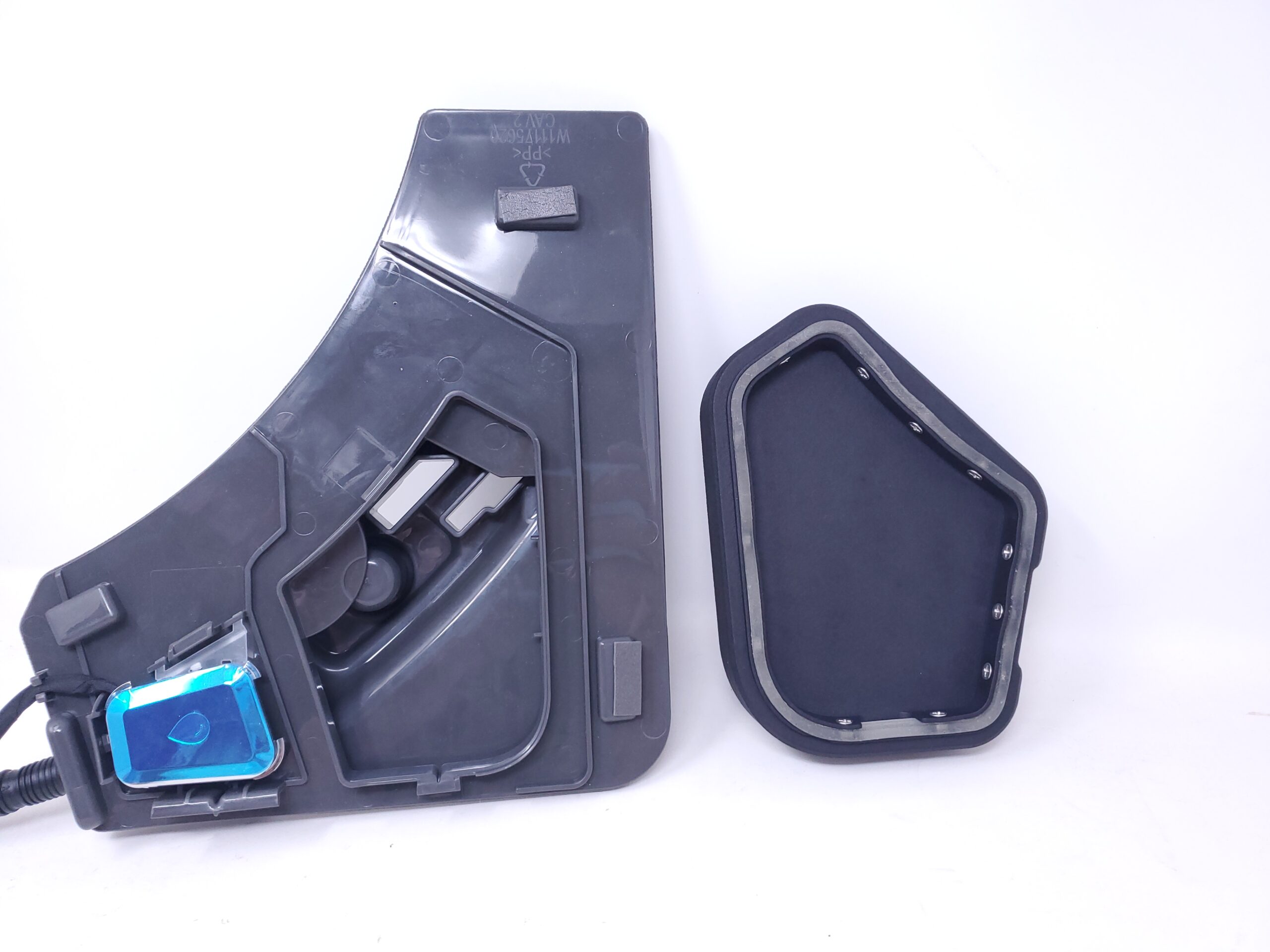
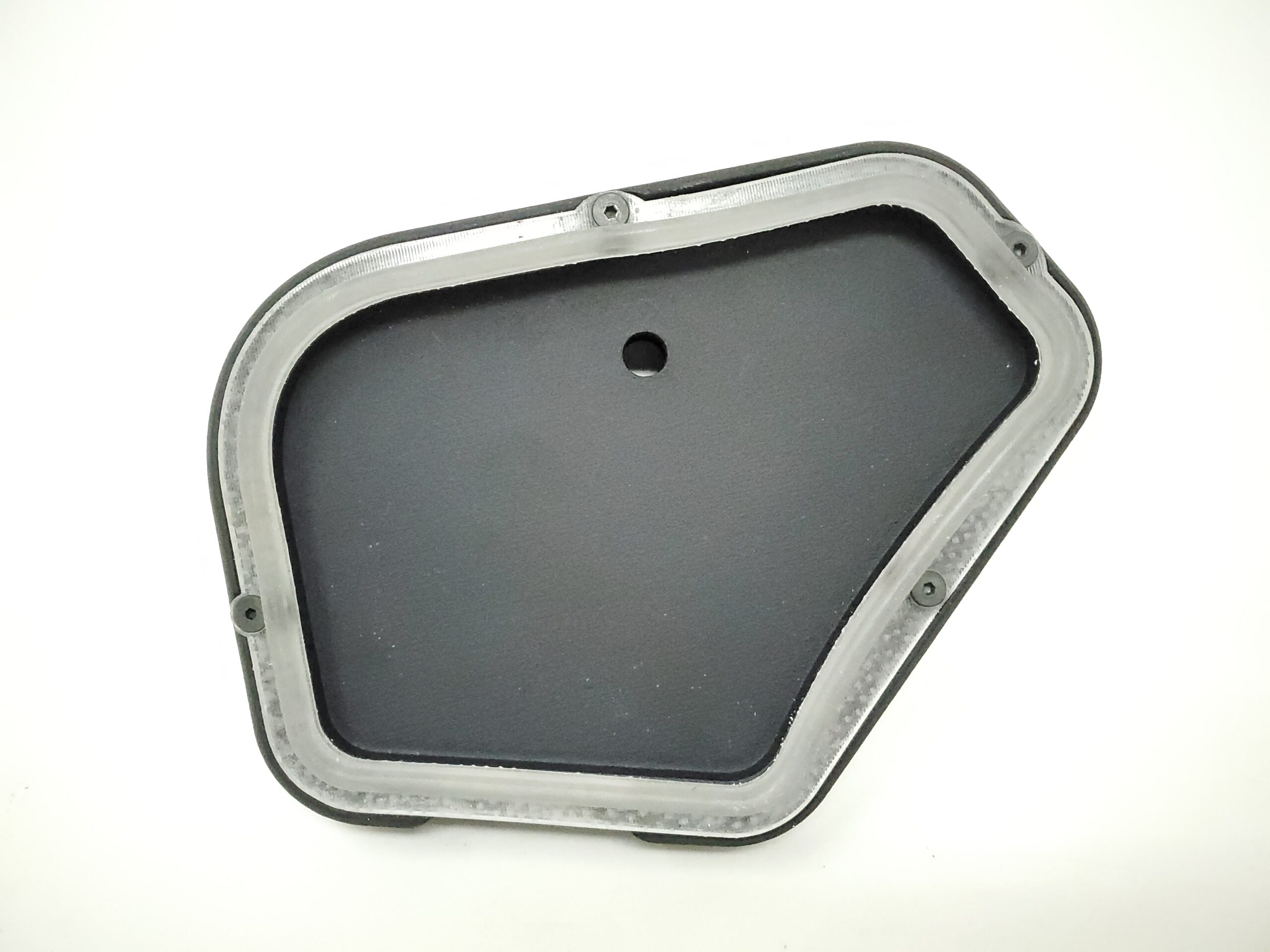
A large injection molder making dishwasher components needed two tools for its line. For both, the customer sent us its production parts and the existing tooling we were retrofitting, and we laser scanned everything so we designed to the real footprint and part surfaces rather than old drawings. In both tools we combined a rigid HP MJF Nylon 12 body with a soft Formlabs Elastic 50A SLA rubber part. The nylon provides structure and mounting, and the 50A rubber flexes just enough to seal or press evenly.
Leak-test seal. An engineering change from the appliance manufacturer gave a plastic-welded part a new, non-round opening. The part has to pass a pressure decay test to prove the weld doesn’t leak, and no off-the-shelf plug would seal that shape. We designed a block that mounts into the customer’s existing test machine and carries a printed 50A seal shaped to the new opening. The rubber compresses against the part’s face for a reliable seal. It’s epoxied to the nylon so the joint is airtight, and screwed through so it can’t creep or start leaking over time.
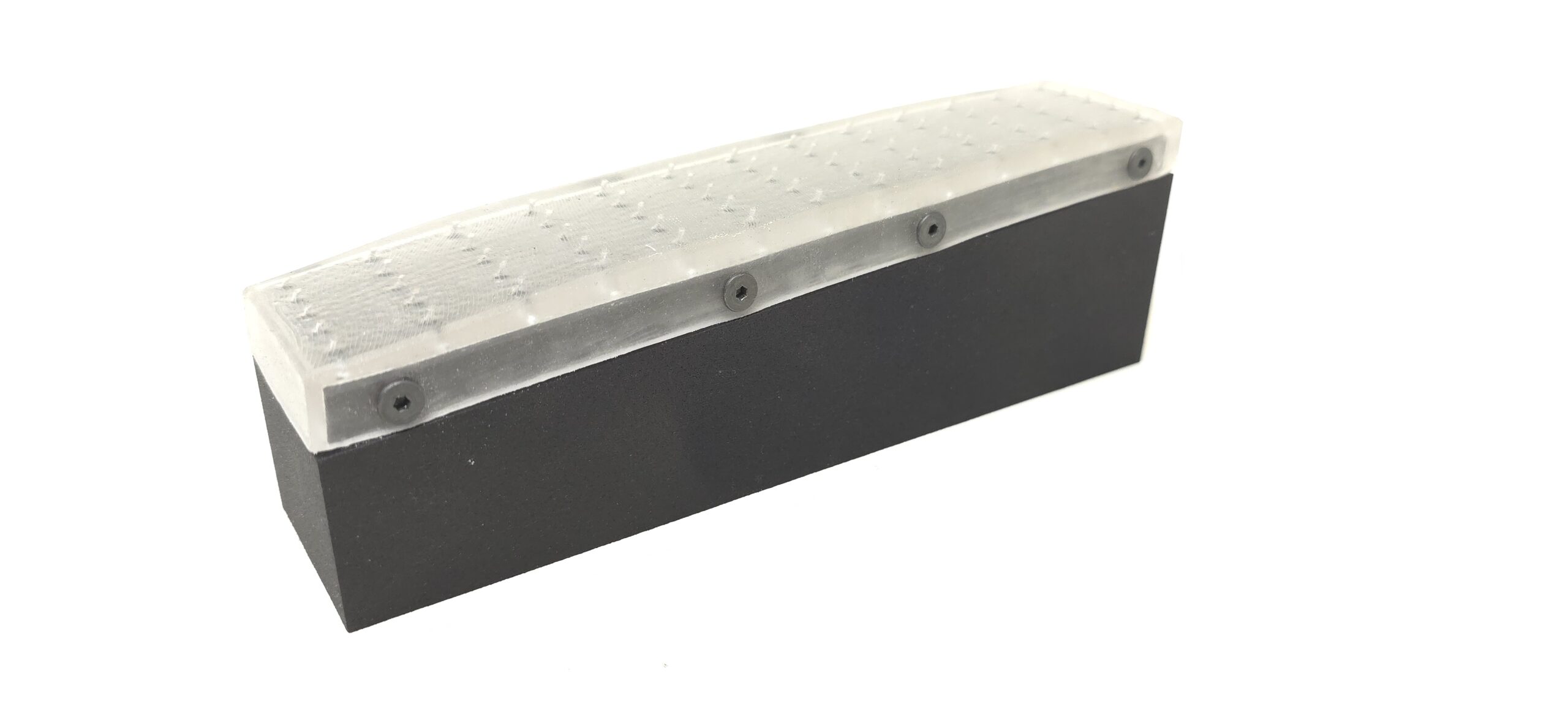
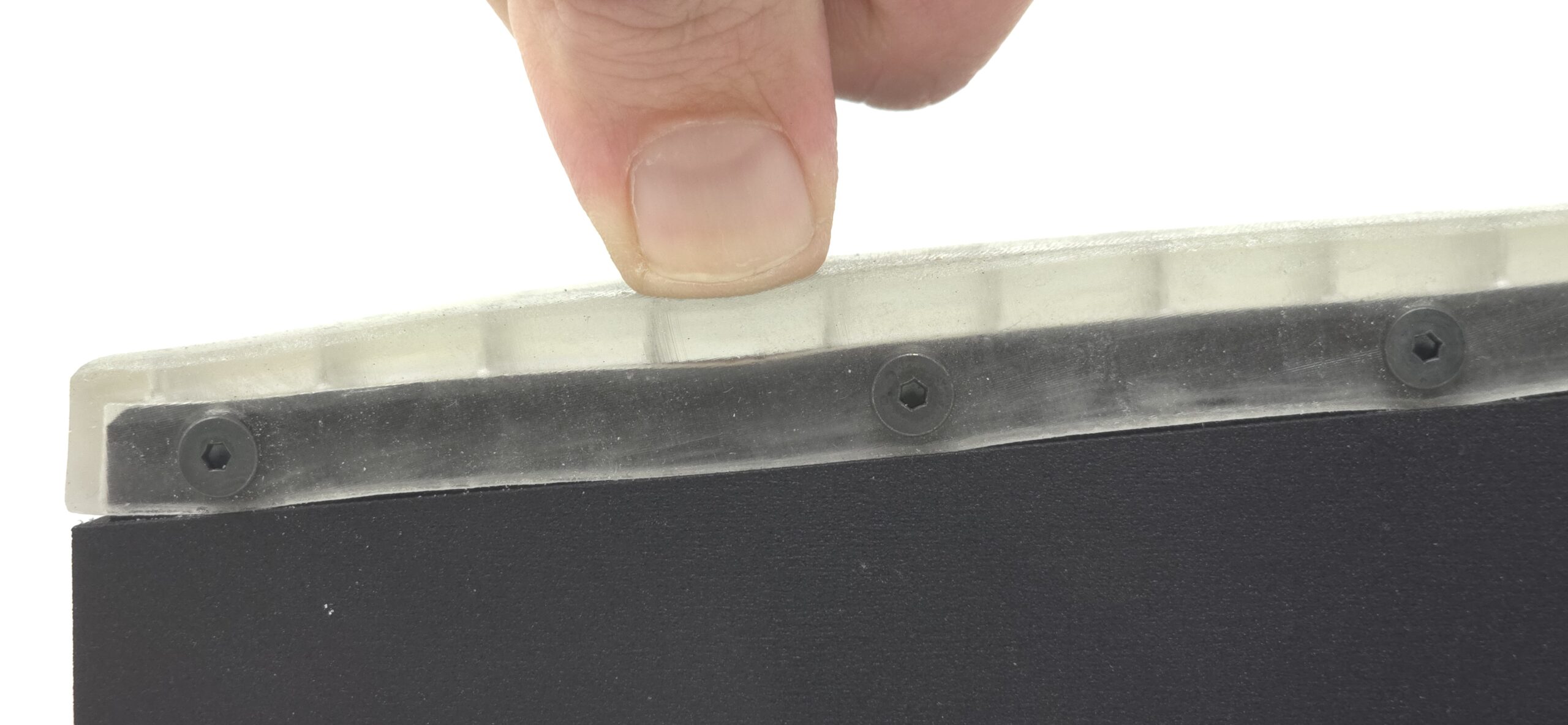
Label-application block. The original block was cast urethane, and after years on the line it had dried out, cracked and was crumbling. The replacement has an MJF base with a 50A rubber face full of vacuum holes. It peels a label off the stack, holds it by vacuum and presses it onto an injection-molded part, and the rubber gives enough to fully wet the label out. Vacuum holds the face in place on its own, and side screws make sure it can never come loose. See more 3D printed vacuum blocks from Forerunner.
Turning a Hand-Carved Concept Into a Production Tool: Tape Applicator
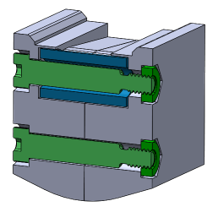
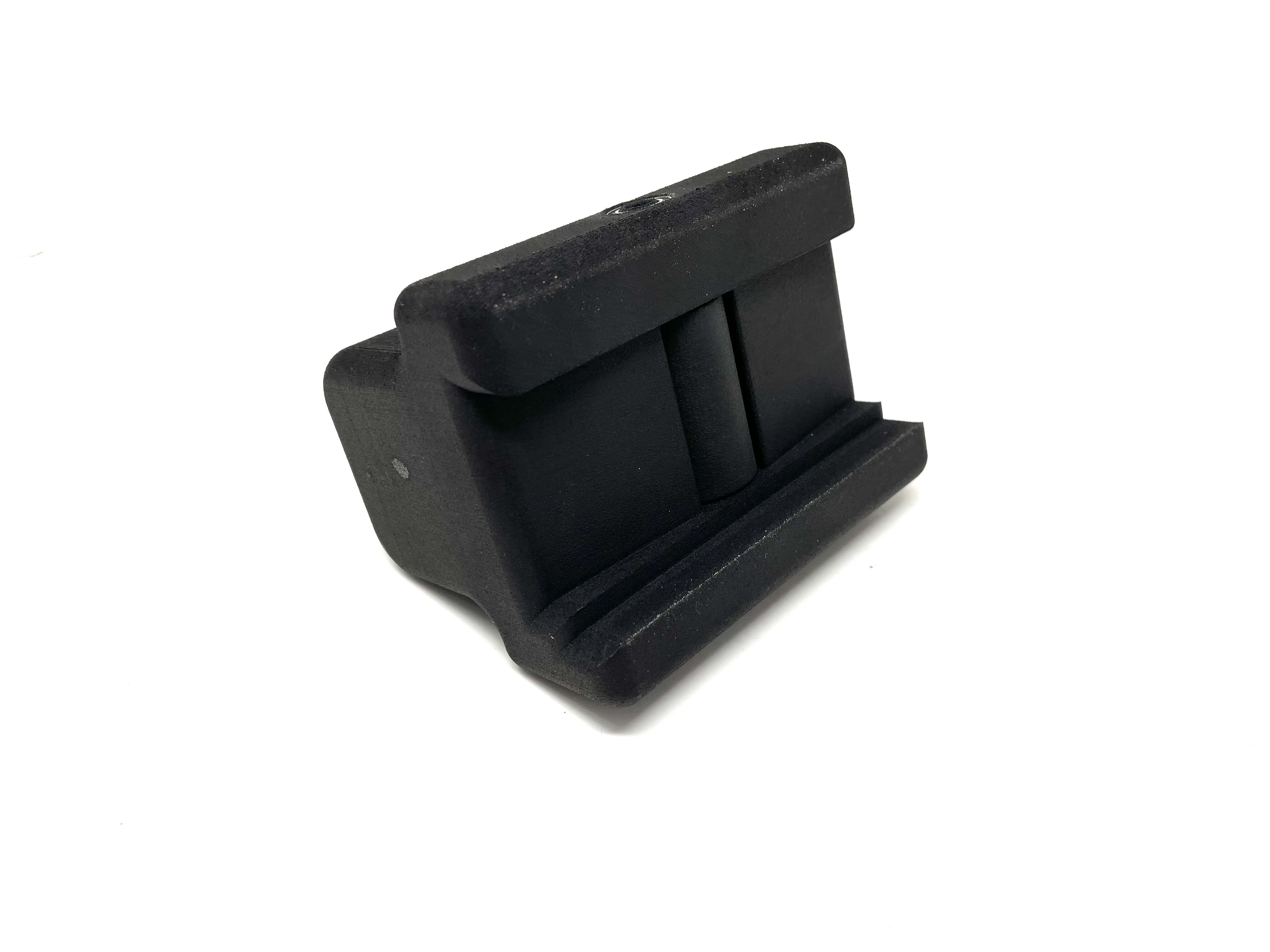

A residential window manufacturer assembling double-hung windows by hand found its biggest bottleneck was applying double-sided tape to an extrusion. Operators had to place the tape by eye, then go back with a hand roller to work out air bubbles and wet it out, and new hires took months to get fast and consistent. The manufacturer’s tape supplier came up with a rough concept, literally hand-carved from a block of wood, and asked us to make it buildable in the hundreds at a workable price.
The finished tool hooks over the extrusion. The operator holds the tape roll in one hand and the tool in the other and rolls it along: the tool guides the tape into place and a built-in roller wets it out in the same pass. The roller is simply Delrin rod running on a shoulder bolt. For the housing, we split the tool down its centerline and laid the halves open, like slices of bread for a sandwich, so they print flat in ABS on our in-house FDM equipment. Every round feature points up in Z for the best accuracy, the build stays short and the only support is inside the screw holes. New operators now reach full speed and placement accuracy within a couple of hours instead of months.
Related Services
- Custom automated machine design: robot cells, assembly machines, nests and end-of-arm tooling
- Commercial product development: taking a product from prototype to manufacturable design
- Fixture & tooling design: assembly, inspection, weld and laser cutting fixtures and trim tooling
- Forerunner 3D Printing: our sister company for 3D printed prototypes and production parts
DeWys Engineering is part of Gambit Works. We’re ISO 9001:2015 certified and ITAR registered.
Frequently Asked Questions
Can you print a part that was designed for injection molding or machining?
Usually, yes. But a redesign for the printing process often makes it cheaper, stronger or lighter, and can eliminate assembly steps. We’ll tell you which approach makes sense.
How do I know which 3D printing process to use?
It depends on the part’s function, the material properties it needs, its size, finish and quantity. We design with the process in mind, and with Forerunner’s printers in the same building we can test before committing.
What quantities make sense for 3D printed production?
Anywhere from a single replacement part to production runs of thousands or tens of thousands of parts a year, depending on size and geometry. If the volume doesn’t justify a mold, printing is often the most cost-effective option.
Do you only design the part, or can you also print it?
Both. We can design a part for your own supplier, or Forerunner 3D Printing can produce it.
Will you sign an NDA?
Yes. We sign NDAs before discussing project details.
Start Your Design for Additive Project
Send us your part, drawing or idea, and tell us what it needs to do. Call 616-604-1977, email [email protected], or use our contact form.